
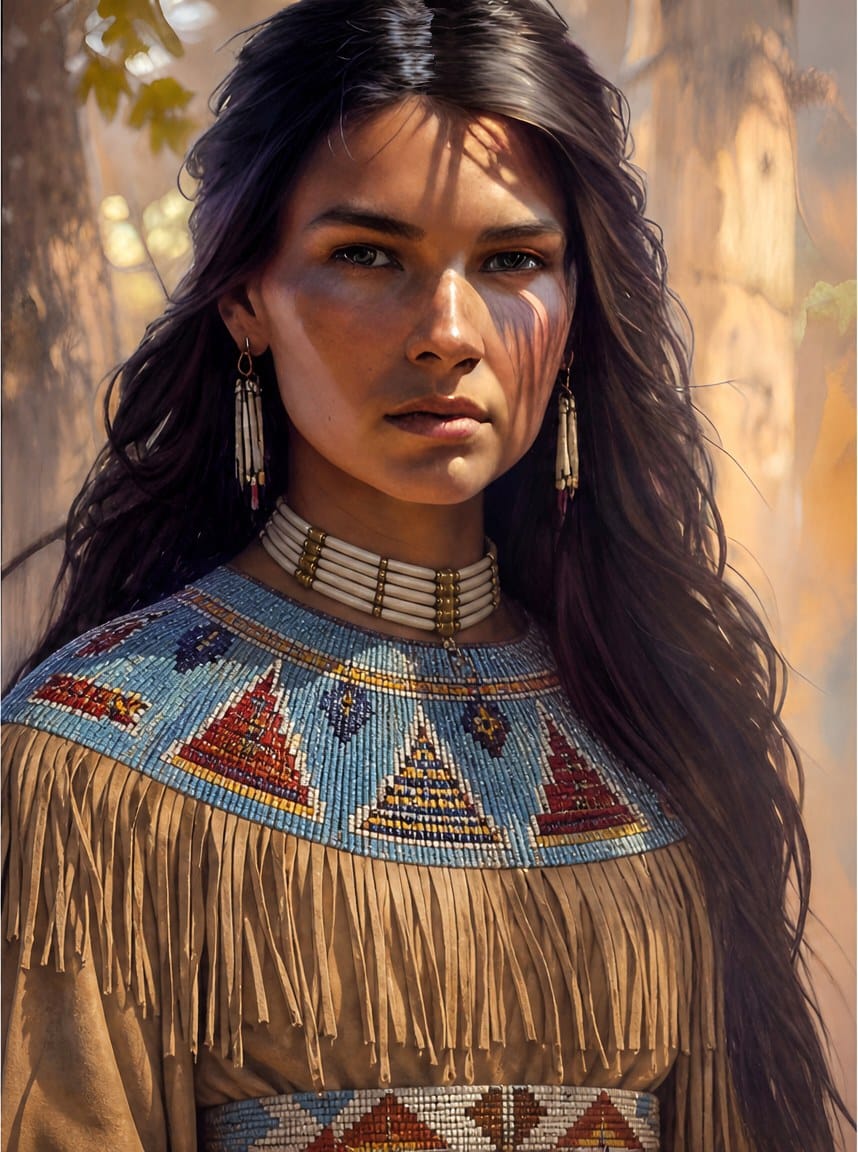
People ask about the seraphs. They look like the cultures of Earth — Lakota, Chinese, Zulu, Greek — and the assumption is that I borrowed.
It is the other way around.
In the Seraph Hunter Cosmos, the seraphs were made before Eden was. After the Flood, when the people scattered at Babel, the Creator sent the six remaining seraphs down to help them rebuild — each to a group, each leaving something of herself behind. The cultures of this world reflect the seraphs. Not the reverse.
Which brings me to Wichapi.
In Book One she is a Lakota woman with a gift for animals. In time she comes to understand that she is the White Buffalo Calf Woman herself — and a man who reaches for her is judged exactly as the legend says he was.
Readers who don’t know the legend will read past it. Readers who do will recognize what I didn’t invent.
In the traditional account, two scouts see her coming across the plains. One recognizes a holy being and bows his head. The other sees only a beautiful woman, says he will take her for his wife, and steps forward to lay hands on her. A cloud comes down. When it lifts she is standing untouched, and at her feet is a pile of bones.
Most retellings leave that out. Children’s versions certainly do. But it isn’t a dark footnote — it’s the point of the whole legend: you must approach that which is sacred with a pure heart and not selfish intent. The Lakota tell the legend true.
Wichapi’s mother was raped and murdered.
When a woman carrying that comes into terrifying power and reaches for a story to live inside, she doesn’t reach for a gentle one. She reaches for the holy woman who turned a man to bones for exactly that.
I didn’t choose that legend to be provocative. Wichapi did. I believe she chose rightly.
M.J.
Recent Comments